
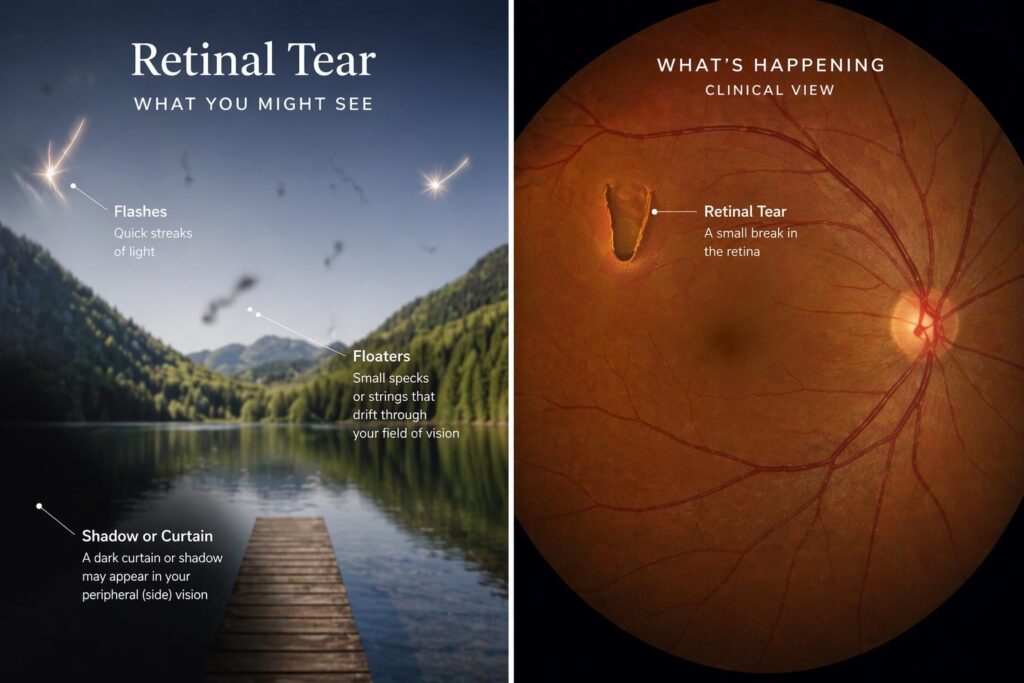
You’re watching TV when bright flashes suddenly appear in the corner of your vision, or you notice new dark spots floating across your sight like tiny gnats. These changes might seem minor, but they can signal a serious problem with your retina—the thin tissue at the back of your eye that captures light and sends images to your brain.
A retinal tear requires immediate medical attention because it can lead to permanent vision loss if left untreated. Recognizing the warning signs early can help preserve your sight and prevent complications that could affect your daily life. Southwood Eyecare provides comprehensive emergency eye care for urgent vision concerns, such as retinal tears, serving patients in Southwood, Haysboro, Canyon Meadows, and surrounding South Calgary communities.
What Happens When Your Retina Tears
Think of your retina like wallpaper lining the inside of your eye. When this delicate tissue gets damaged or pulls away from the wall behind it, you experience a retinal tear. The tear disrupts how your eye processes visual information, which may explain why you see flashing lights or floating spots.
Without prompt treatment, the tear can worsen and lead to retinal detachment. This happens when fluid seeps behind the retina through the tear, causing more of the tissue to separate from its normal position. Your risk increases as you get older because the clear gel inside your eye naturally shrinks and can tug on the retina.
Key Warning Signs You Need to Watch For
Visual Changes That Happen Suddenly
The most common early warning signs involve sudden changes in your vision that weren’t there before. You might notice bright flashes of light, especially when you move your eyes or look to the side. These flashes often appear in your peripheral vision and can happen even when your eyes are closed.
New floaters—those small dark spots or squiggly lines that drift across your vision — also signal potential retinal problems. While everyone has some floaters, a sudden increase in their number or size needs immediate attention. You might also see a dark shadow or curtain moving across part of your visual field, which indicates the retina is already detaching.
Other Symptoms to Take Seriously
Blurred vision that develops quickly rather than gradually can indicate a retinal tear. This blurriness might affect your central vision or make it harder to see fine details when reading or driving.
Loss of side vision creates blind spots that make you turn your head more to see things around you. You might also notice a gray or dark area that blocks part of your normal vision, similar to looking through a dirty window in one part of your field of view.

Who Has a Higher Risk of Retinal Tears
Age plays the biggest role in the risk of retinal tears. People over 50 face a higher chance because the vitreous gel inside their eyes begins to shrink and pull away from the retina. This natural aging process creates tension that can cause tears.
Severe nearsightedness also increases your risk. When you’re very nearsighted, your eyeball is longer than normal, which stretches the retina and makes it more fragile. Family history matters too—if your parents or siblings had retinal problems, you’re more likely to develop them.
Previous eye injuries, certain eye surgeries, and conditions like diabetes can also raise your risk. An optometrist can assess your individual risk factors during regular eye exams and provide specialized care for diabetic patients.
When to Seek Emergency Eye Care
Don’t wait if you experience sudden flashes of light, especially if they’re accompanied by new floaters or vision loss. These symptoms can develop quickly and require immediate evaluation by an eye doctor. The sooner you get treatment, the better your chances of preserving your vision.
Any rapid vision loss—whether it affects your central vision or creates a curtain-like shadow across your field of view—requires emergency attention. Even if the symptoms seem to improve on their own, the underlying tear can still worsen without proper treatment.
Contact an eye care professional immediately rather than waiting for your next scheduled appointment. If you’re in South Calgary and experiencing sudden vision changes, our team at Southwood Eyecare offers same-day emergency appointments to help protect your sight.
How Eye Doctors Diagnose & Treat Retinal Issues
Diagnostic Tests Your Eye Doctor May Use
Your eye doctor will start with a comprehensive eye exam, using advanced imaging technology to get a detailed view of your retina. This allows them to examine the entire back of your eye, including areas where tears commonly occur, without needing to dilate your pupils in most cases.
Our team can use Optomap retinal imaging to capture an ultra-wide view of your retina in a single scan, covering nearly 200 degrees and helping identify even small tears or areas of weakness. Because Optomap doesn’t require dilation, your eye doctor can examine the back of your eye thoroughly and comfortably during the same visit.
Treatment Options Available
Treatment for retinal tears typically involves a referral to a retinal specialist or ophthalmologist. For smaller tears, laser therapy is a common option. The specialist creates tiny burns around the tear, forming scar tissue that “welds” the retina back in place and helps prevent further vision loss. This outpatient procedure usually takes 15-30 minutes.
For more complex cases or detachments that have already progressed, your specialist may recommend surgical procedures. Your optometrist’s role is to identify retinal issues quickly, refer you to the right specialist, and provide ongoing monitoring before and after treatment.
If you’re experiencing any sudden changes in your vision, don’t delay seeking care. The team at Southwood Eyecare provides comprehensive eye exams and emergency eye care to help protect your sight. Conveniently located in the Southwood Corner shopping centre at Southland Drive and Elbow Drive, we welcome patients from across South Calgary.
Contact us today to schedule an appointment and get your symptoms evaluated.