It’s incredibly common to brush off minor vision issues as just another part of life. Blurry text, tired eyes, and headaches after a long day are frustrating, and they often signal that something is changing with your vision. Taking a proactive approach helps you manage these changes before they start affecting your daily routine.
How often you should get an eye exam depends on your age, health history, and whether you wear glasses or contacts. Most people should get an eye exam every 1 to 3 years. Keeping up with this routine is a simple way to stay on top of your eye health and recognize potential issues early.
Why Regular Eye Exams Matter
Many eye conditions develop without obvious symptoms. Glaucoma, for instance, can quietly impact your vision for years without causing any noticeable pain or obvious symptoms. By the time you notice something feels off, significant changes may have already occurred.
Routine eye exams do more than just check your prescription. A comprehensive eye exam may also reveal signs of broader health concerns, including diabetes, high blood pressure, and certain neurological issues. Your eyes reflect a lot about your overall health, making these exams a vital part of your well-being.
Eye Exam Frequency by Age
Age is a great starting point for figuring out how often you need an eye exam. There’s no single schedule that fits absolutely everyone, but some general guidelines can keep your vision on track.
Infants and Young Children (Birth to 5)
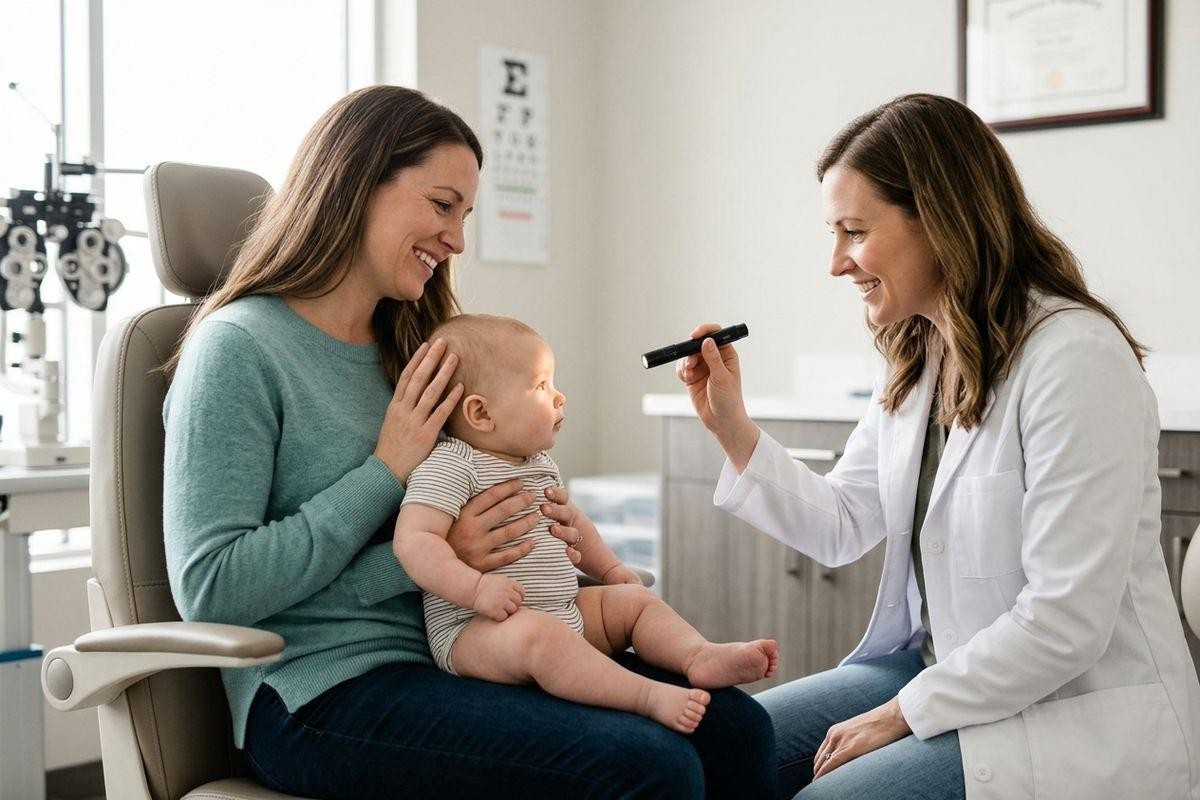
Eye development happens incredibly fast during the first few years of life. Because of this, a child’s first eye exam should be at around 6 to 9 months of age. You should also plan for at least one more exam between the ages of 2 and 5, right before they start school.
Children rarely know how to speak up when something is wrong with their vision. They usually just assume everyone sees the world exactly the way they do. Early exams help detect and manage issues like lazy eye or crossed eyes right when they’re most treatable.
School-Age Kids and Teens (6 to 19)
Book annual exams for your children once they start attending school. Vision can change quickly during these active years, and a prescription that fit perfectly last fall might not provide sharp enough vision by the spring.
Nearsightedness, or myopia, often begins in childhood and can progress into the teen years. Identifying it early gives your optometrist more opportunities to monitor changes and recommend myopia-control options when appropriate. At Southwood Eyecare, this may include specialized lenses designed to help slow progression while supporting clear vision.
Adults (20 to 64)
We recommend annual eye exams for adults, even if your vision seems stable. Regular yearly visits help keep your prescription current, monitor changes in eye comfort, and detect early signs of eye conditions like dry eye before they become more noticeable.
After age 40, annual exams become especially valuable. Changes in reading vision, eye pressure, and risks for conditions like glaucoma can become more common in your 40s and 50s.
Adults 65 and Older
We recommend sticking to annual exams once you reach 65. Cataracts, macular degeneration, and other age-related changes become far more likely as you get older. Detecting these changes earlier may give you more options for protecting your vision going forward.
Reasons You Might Need More Frequent Exams
General age guidelines work well for many people, but certain factors require a closer look. You may need more frequent visits if you fall into specific health or lifestyle categories.
Health Conditions That Affect Frequency
Certain health conditions require closer monitoring, even when your vision feels perfectly fine. Your optometrist may recommend more frequent visits if you have any of the following risk factors:
- Diabetes or high blood pressure, which can affect blood vessels in the eye
- A family history of glaucoma or hereditary eye disease
Regular eye exams allow eye doctors to monitor any changes and keep you updated on anything that may be affecting your vision.
Glasses and Contact Lens Wearers
If you wear glasses or contacts, yearly prescription reviews help keep your vision as clear as possible. Contact lens wearers need a little extra attention, as the lenses sit directly on the eye and can affect eye health in various ways. The fit, the health of your cornea, and the lens type all factor into your long-term comfort and eye health.
Warning Signs That Require Immediate Attention
Some changes to your vision shouldn’t wait for a scheduled appointment. Contact your optometrist promptly if you notice any of these warning signs:
- Eye pain, redness, or dryness that refuses to go away.
- Flashes of light, a sudden increase in floaters, or a shadow/curtain in your vision.
- Sudden blurring or a noticeable change in how clearly you see.
Early attention can help your optometrist determine whether symptoms are related to dry eye, infection, retinal changes, or another concern that needs treatment.
What Happens During Your Eye Exam
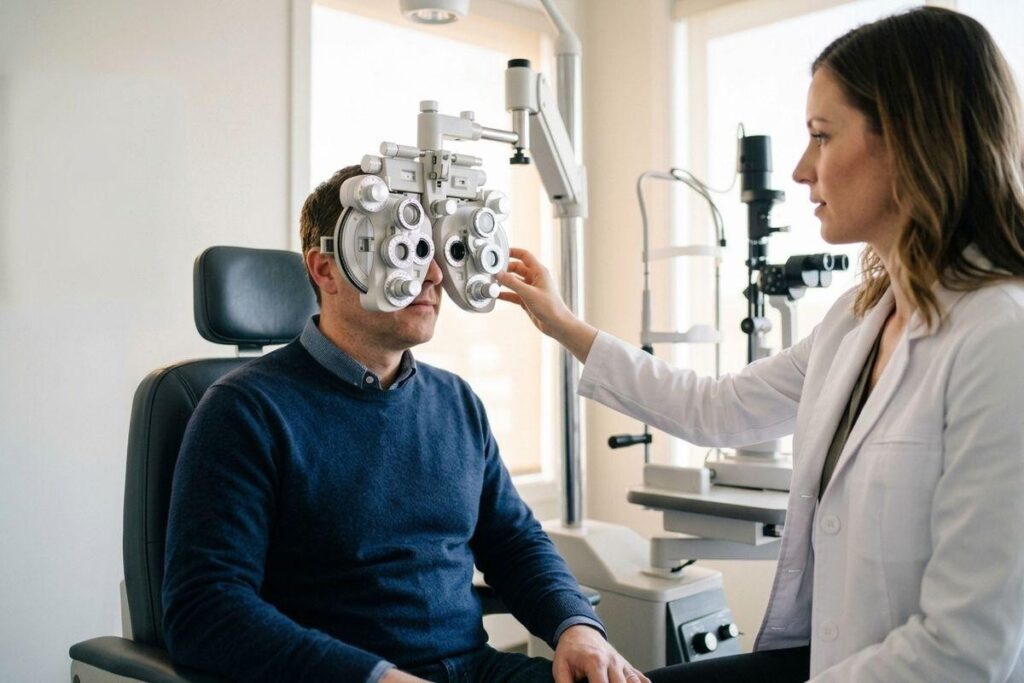
The exam starts with a conversation. Your optometrist will ask about your medical history, any medications you take, and whether eye conditions run in your family. This background shapes what we look for during the rest of the visit.
Vision testing and a prescription check follow. We can update your prescription for glasses or contacts if your vision has changed since your last visit. We will then thoroughly examine both the internal and external structures of your eye.
This process includes taking a close look at the retina, optic nerve, cornea, and lens. Screening for conditions like dry eye, myopia, and early signs of disease is part of a thorough exam.
Take Charge of Your Eye Health
Getting in for a regular visit is one of the most practical things you can do for your long-term well-being.
Keeping up with routine exams helps your eyes stay comfortable, healthy, and supported for years to come. Schedule your next comprehensive eye exam with Southwood Eyecare and take a proactive step toward protecting your vision.