
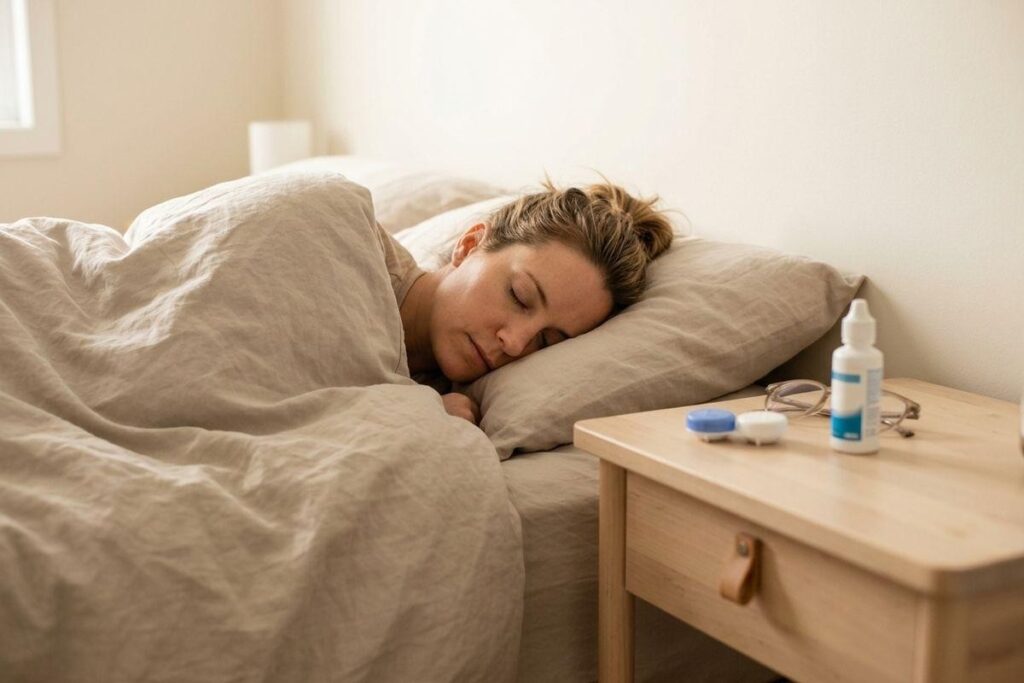
Contact lenses offer incredible freedom and clear vision without the hassle of glasses. Sometimes, after a long day, you might wonder if taking them out before bed is truly necessary. For most people wearing standard daily-wear lenses, sleeping in contacts isn’t safe and can lead to serious eye health issues.
Your cornea, the clear front surface of your eye, doesn’t get oxygen from blood vessels the way other tissues do. It pulls oxygen directly from the air. When your eyelids close during sleep, that supply already drops. Adding a contact lens on top creates a second barrier, leaving your cornea short on oxygen for hours at a time.
The Risks of Sleeping in Your Contacts
Leaving your lenses in overnight sets the stage for several uncomfortable and potentially harmful issues.
Eye Infections and Corneal Damage
A warm, moist space with limited airflow is the kind of environment where bacteria thrive. That’s exactly what forms under a contact lens when your eye is closed all night. Bacteria that would normally be flushed away by blinking get trapped against your cornea.
This raises your risk of keratitis, an infection of the cornea that can be painful and, if left untreated, can lead to lasting damage to your vision. Corneal ulcers are another concern. Even small abrasions from a dry or stuck lens can create an opening for infection to take hold.
Dry Eyes and Morning Discomfort
Contact lenses absorb moisture from your tear film throughout the day. At night, your eyes produce fewer tears. Put those two things together, and you get lenses that are practically glued to your eyes by morning.
You might notice a gritty, scratchy feeling when you first open your eyes, or blurry vision that takes longer than usual to clear up. That discomfort is your eyes signalling that something is off. For anyone already managing dry eye symptoms, sleeping in contacts can make the problem noticeably worse.
For anyone already managing dry eye symptoms, which are common in Calgary’s dry climate, sleeping in contacts can make the problem noticeably worse.
What to Do If You Fall Asleep with Contacts In
It happens to almost everyone at some point. If you wake up with your lenses still in, don’t panic, but don’t rush to pull them out either.
Follow these steps if you wake up with your contacts still in:
- Do not pull them out right away, as the lens may be stuck to your eye from dryness, and forcing it off can scratch your cornea.
- Use rewetting drops and blink several times to loosen the lens before removing it.
- Switch to glasses for the rest of the day to give your eyes time to recover.
Signs You Should See an Eye Doctor
One accidental nap usually isn’t a crisis, but pay attention to how your eyes feel afterward.
Watch for these symptoms:
- Persistent redness
- Pain
- Sensitivity to light
- Unusual discharge
- Swelling around the eye
If any of these show up and don’t settle down within a few hours, it’s worth getting your eyes checked by a professional sooner rather than later.
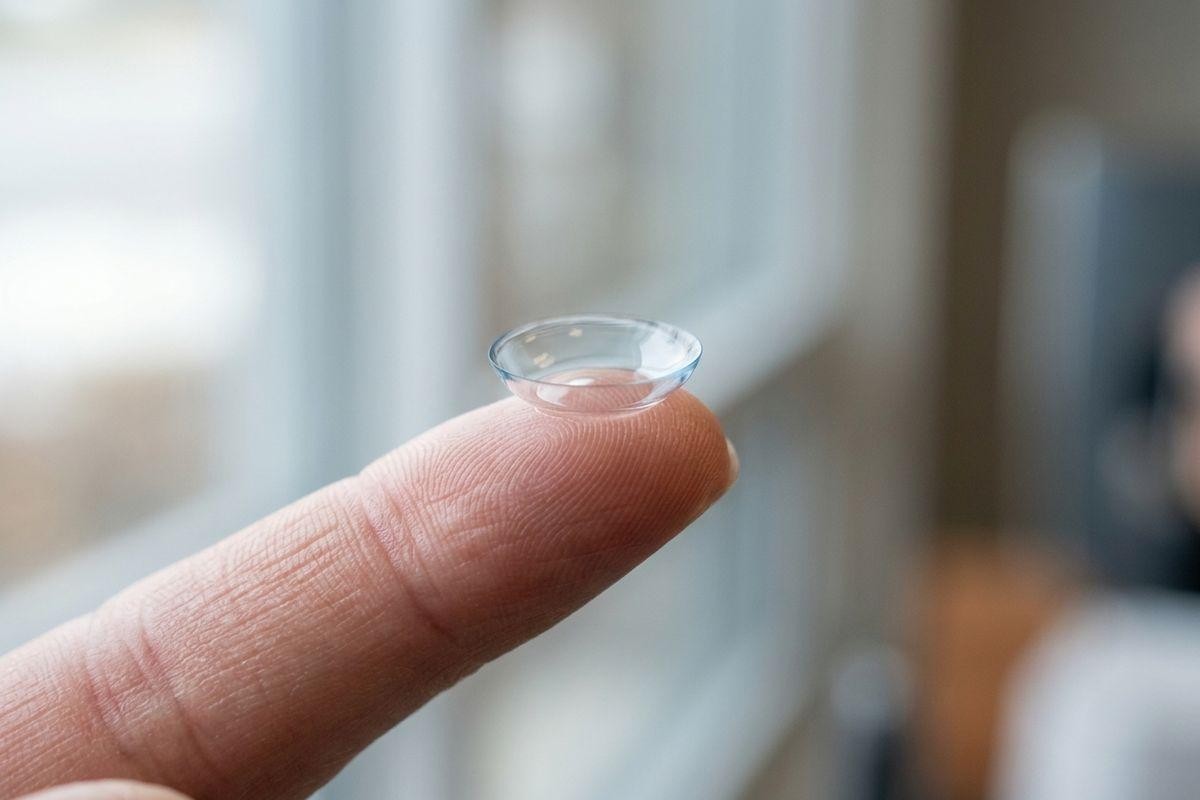
Are There Contacts You Can Sleep In?
Not all contact lenses work the same way. A couple of options are actually designed with overnight wear in mind.
Ortho-K Lenses
Orthokeratology lenses, often called ortho-k, are worn while you sleep to gently reshape the front surface of your cornea. You take them out in the morning and go through your day without needing glasses or contacts. They’re often used as part of myopia control plans for children and teens whose prescriptions are changing frequently.
Extended Wear Lenses
These are made from silicone hydrogel, a material that allows significantly more oxygen to reach your cornea than older lens materials. Some are approved for up to a week of continuous wear, including overnight. That approval is real, but it doesn’t make overnight wear risk-free. Even with these lenses, sleeping in contacts carries a higher risk of eye infection than taking them out each night, so they aren’t the right choice for everyone.
Your eye health, tear production, and lifestyle all factor into whether extended wear is a good fit for you. Regular monitoring with an optometrist is an essential part of using them safely. A professional contact lens fitting helps confirm you’re in the right lens for your specific needs.
Build Healthy Contact Lens Habits
How you care for your lenses day to day makes a real difference in how your eyes feel and how well they hold up over time.
- Wash your hands thoroughly before inserting or removing lenses
- Follow your lens replacement schedule without stretching it out, even if they still feel fine
- Book regular eye exams so an optometrist can check the health of your cornea and fit of your lenses
Small daily habits add up quickly. Treat your contacts as a daily convenience rather than a set-and-forget solution, and protect your vision for years to come.
Wake Up to Clearer, Healthier Vision
Your eyes work hard for you every single day, so giving them a chance to breathe at night is vital for your long-term health. Taking a couple of minutes to remove your lenses before bed can save you from painful infections and daily discomfort.
If you have questions about your contact lens routine or want to find a lens that fits your life, the team at Southwood Eyecare in SW Calgary can help. We take time during every exam to walk you through what we’re seeing and why it matters, so you leave understanding your eyes, not just your prescription.
Book your next eye exam at our Southwood Corner location today.