
You might notice that the words on a page seem a little blurry, or that familiar faces are harder to recognize from across the room. These changes in your central vision can be unsettling. If you’re experiencing these changes, an optometrist can help identify whether you have age-related macular degeneration, or AMD.
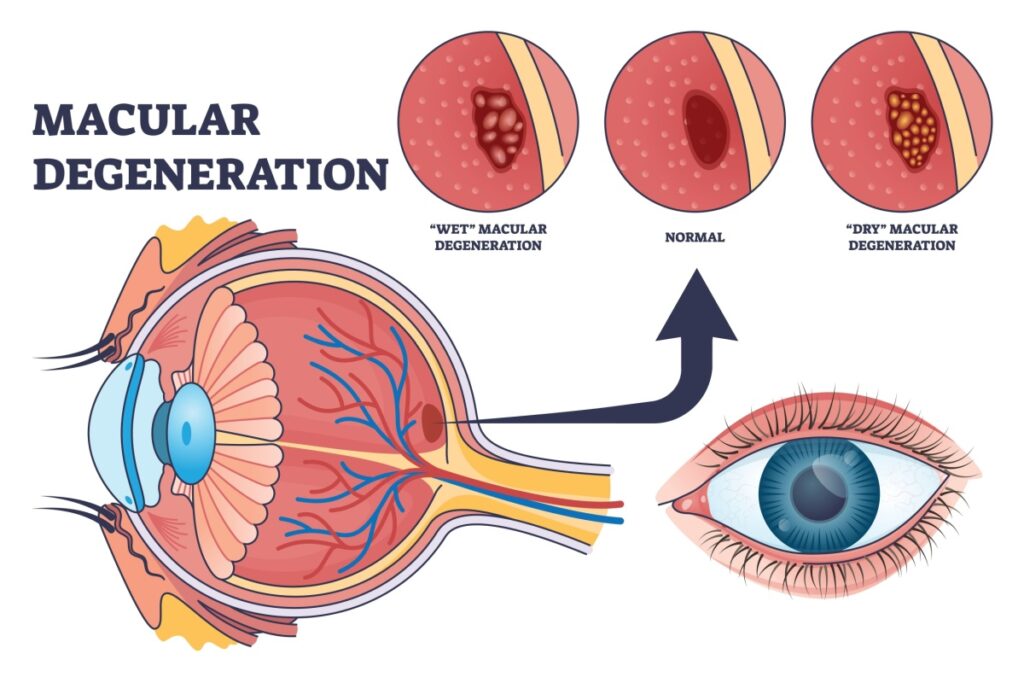
AMD affects the macula, the part of your eye responsible for sharp, detailed sight. The condition comes in two forms: dry AMD, which progresses slowly, and wet AMD, which can cause more rapid vision changes. Knowing the difference between them is a key step in protecting your long-term eye health.
What Is Age-Related Macular Degeneration?
Imagine the back of your eye like a movie screen. The macula is the very centre of that screen, giving you the crisp picture you need to read a book, drive a car, or see the expression on a loved one’s face. AMD is a condition that causes this central part of your vision to break down.
As the macula deteriorates, your central vision can become blurry or distorted, while your peripheral (side) vision usually stays clear. This can make everyday tasks more challenging over time, highlighting the importance of regular exams for adults and seniors for early detection.
The Two Types of AMD: Dry & Wet
While both forms of AMD affect your central vision, they do so in different ways. One type is far more common and develops gradually, while the other is less frequent but can progress much faster.
Dry AMD: The Gradual Form
Dry AMD is the more common of the two types. It happens when the light-sensitive cells in the macula slowly break down. You can think of it like a photograph that gradually fades in the centre over many years. This form of AMD often leads to a slow blurring of your central vision.
Wet AMD: The Aggressive Form
Wet AMD is less common but is typically more serious. This condition occurs when new, unstable blood vessels grow underneath the macula. These vessels can leak blood and fluid, which can damage the macula quickly and cause more noticeable changes to your sight.
Key Differences & Symptoms to Note
Recognizing the signs of AMD can help you take action sooner. The symptoms you experience often depend on whether you have the wet or dry form of the condition.
How They Affect Your Vision
With dry AMD, you might first notice a need for brighter light when reading or find that colours look less vibrant. The changes happen so slowly that you might not be aware of them at first. Wet AMD, on the other hand, can cause sudden distortions—like seeing waves in straight lines on a doorframe. These sudden changes are often considered an eye emergency that requires prompt attention.
Common Signs of AMD
- Dry AMD: A gradual blurriness in your central vision, muted colours, or a need for brighter light when you read.
- Wet AMD: Straight lines that appear wavy or crooked, or a sudden blurry or blind spot in your central field of vision.
If you notice any of these symptoms, schedule a comprehensive eye exam so your optometrist can examine your macula and determine the next steps.

How a Calgary Eye Doctor Can Help
When you notice changes in your vision, a professional eye exam is the next step. Your local Calgary optometrist has the tools and knowledge to monitor your eye health and detect early signs of conditions like AMD.
The Importance of a Comprehensive Eye Exam
A comprehensive eye exam can reveal the health of your macula, often before you see any major symptoms. The eye doctor can use tools like an Optomap retinal image to look for tiny yellow deposits called drusen under the retina—an early sign of dry AMD—or detect the leaky vessels associated with wet AMD. Early detection is a big part of managing the condition.
Your Options for AMD Management
There are ways to manage both forms of AMD, and early detection gives you the most options. For dry AMD, management often involves nutritional supplements rich in vitamins and antioxidants, along with regular monitoring to track its progression.
For wet AMD, there are medical treatments available that can help slow vision loss, though these typically require referral to a retinal specialist. Your Calgary eye doctor at Southwood Eyecare can coordinate your care and monitor your progress with advanced diagnostic imaging like Optomap retinal scans.
Regular monitoring is essential for both types of AMD. During your comprehensive eye exams, your optometrist can track changes in your macula over time and adjust your management plan as needed. The practice’s advanced diagnostic technology makes it easier to catch subtle changes early.
Protect Your Long-Term Eye Health
You can take simple, proactive steps every day to support your vision as you age. Making healthy choices can contribute to your overall eye wellness.
Lifestyle Habits for Healthy Eyes
Eating a diet rich in leafy green vegetables, fish, and nuts can support your eye health. It is also helpful to protect your eyes from UV sunlight with sunglasses and to avoid smoking, which is a significant risk factor for AMD.
The Value of Routine Eye Care
Regular eye exams help you stay on top of your vision. These check-ups allow your optometrist to track any changes year after year and catch potential issues before they become more serious.
Age-related macular degeneration doesn’t have to mean losing your independence or the activities you love. When caught early through regular eye exams, both wet and dry AMD can be managed effectively. If you’ve noticed changes in your central vision or it’s been more than two years since your last eye exam, don’t wait.
Book an appointment at Southwood Eyecare today and take control of your eye health before small changes become bigger problems.