
You might notice your child squinting to read street signs or struggling to see the board at school, even though reading books up close seems easy. If this sounds familiar, your child could be dealing with myopia, a condition also known as nearsightedness. The team at Southwood Eyecare sees this often, as it is one of the most common vision issues affecting children and young adults.
Parents often ask if myopia can be reversed. While it cannot be reversed, its progression can be slowed. Myopia worsens due to a combination of genetic factors and daily habits that affect how your child’s eyes grow. With the right approach from a Calgary optometrist, your child can enjoy clearer vision and support long-term eye health.
Common Factors in Myopia Progression
Several parts of your daily life and family background can affect how your vision changes over time. Understanding these factors is the first step toward managing your eye health and making informed choices for your family.
Your Family History & Genes
If you or your partner have nearsightedness, your child is more likely to develop it as well. Genes play a significant role in how your child’s eyes grow and develop through childhood and into their adult years. Children with two myopic parents face an even higher risk of developing myopia themselves, often at an earlier age. While you can’t change your family’s genetic predisposition, knowing this risk helps you stay proactive with regular eye exams and early intervention.
Too Much Close-Up Work
Spending long hours on activities like reading, using a computer, or looking at a phone can put strain on your child’s eyes. This consistent close focus can encourage the eye to grow longer, which makes myopia worse over time.
Modern childhood involves more screen time than ever before, from online learning to video games and social media. When your child focuses on something close up for extended periods, their eyes work harder to maintain that focus.
The Canadian Association of Optometrists recommends limiting recreational screen time and ensuring your child takes regular breaks during homework or computer use. Holding books, tablets, or phones too close to the face also increases eye strain and may contribute to myopia progression.
Not Enough Time Outdoors
Spending time outside, especially in natural daylight, is helpful for your child’s eyes. The type of light outdoors may help slow down the changes in the eye that lead to increased nearsightedness.
Research suggests that children who spend at least 90 minutes to 2 hours outdoors each day have a lower risk of developing myopia or experiencing rapid progression. Natural outdoor light stimulates the release of dopamine in the retina, which may help regulate healthy eye growth.
Outdoor activities also encourage your child to look at objects in the distance rather than focusing close up, giving their eyes a natural break. Even on cloudy days, outdoor time provides benefits that indoor lighting simply can’t match.
Recognize the Signs of Vision Changes
It’s important to notice the subtle signs that your child’s prescription might be getting stronger. Spotting these changes early helps you address the progression sooner and get your child the care they need.
What to Look For in Your Child
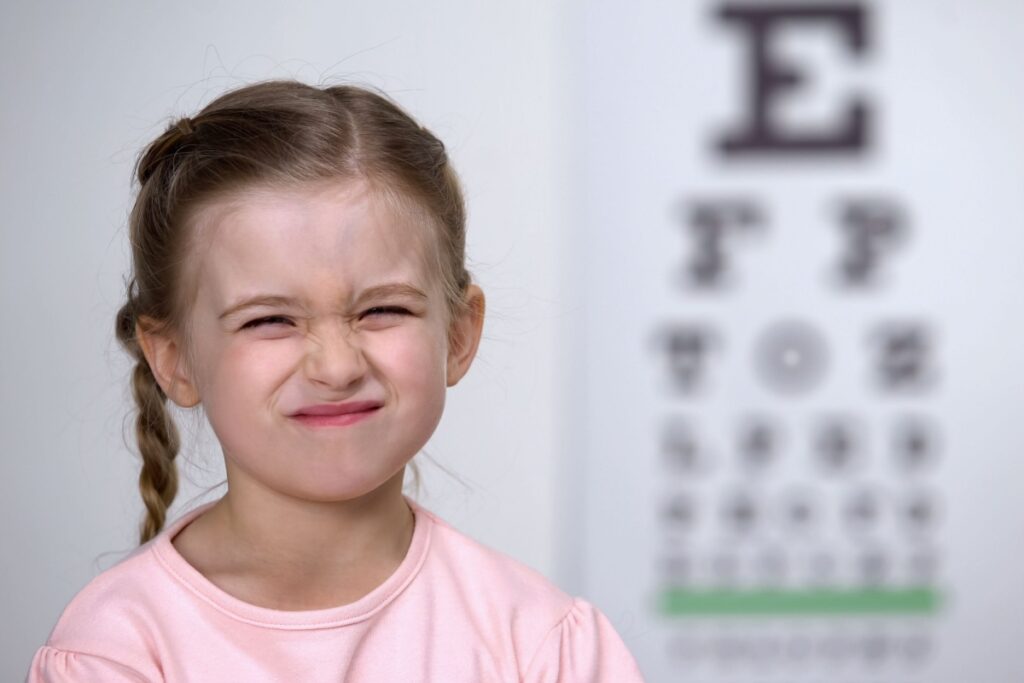
- Squinting to see the board at school or the TV
- Moving closer to screens or holding books close to their face
- Complaints of headaches or tired eyes, especially after school
- Rubbing their eyes often
- Difficulty seeing distant objects during sports or outdoor activities
- Losing interest in activities that require distance vision
How an Eye Doctor Can Help
Regular visits to a Calgary optometrist are key to monitoring vision changes. An eye exam does more than just check your prescription, it is a full health check for your eyes.
A Complete Eye Health Check
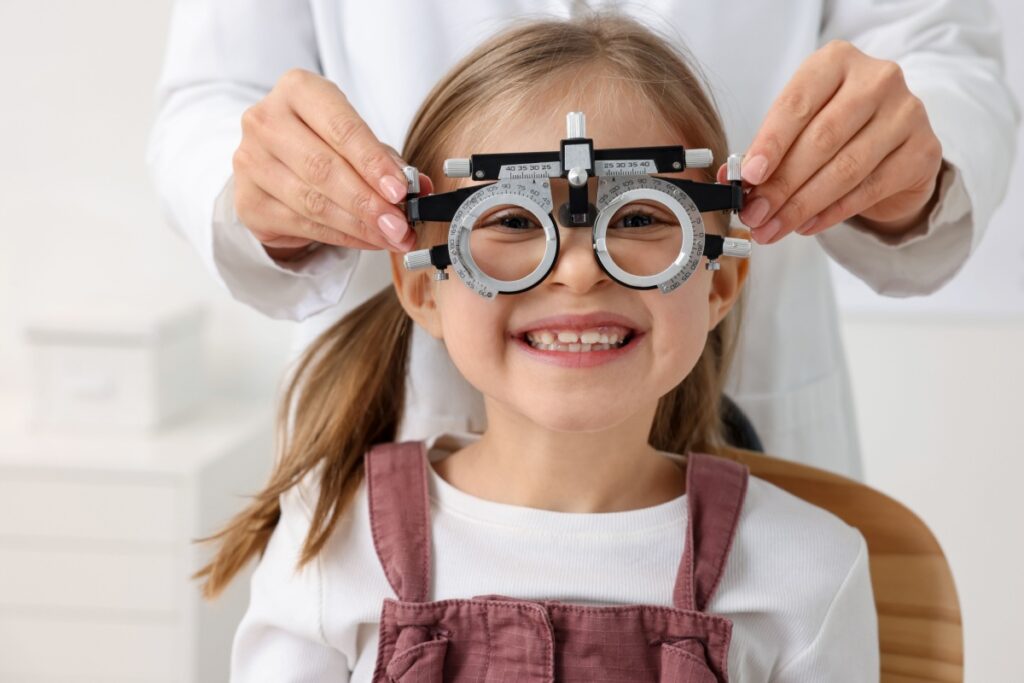
During the appointment, our team performs a series of tests to measure your child’s vision precisely. They also check the overall health of their eyes to track any changes from the last visit and keep a detailed record of their vision development. Children’s eye exams are designed to be comfortable and engaging, helping young patients feel at ease while getting thorough care.
Discuss Your Child’s Lifestyle & Habits
Your Calgary optometrist can talk with you about your child’s daily activities, from their school environment to their screen time and outdoor play. This conversation helps them understand your child’s unique vision needs and any factors that might be affecting their eyesight.
Modern Options for Myopia Management
While myopia cannot be cured, its progression can be slowed in children. There are several effective options available that can help protect your child’s long-term vision. You can explore myopia control with a professional optometrist to find the right fit for your family.
MiYOSMART Eyeglass Lenses
Southwood Eyecare is proud to offer Hoya’s MiYOSMART myopia control lenses. These revolutionary eyeglass lenses feature exclusive D.I.M.S. Technology, which is proven to slow myopia progression in children by 60% while simultaneously correcting their vision. These lenses are designed specifically for a child’s lifestyle, they’re impact resistant, thin and light, and provide UV protection.
This option works well for children who prefer glasses and want a non-invasive approach to myopia management.
Myopia Control Contact Lenses
Certain specialized contact lenses are designed to slow down eye elongation in children using a technique called myopic defocus. These lenses condition the eyes to stop growing so fast while providing clear vision throughout the day. Contact lenses can be an excellent choice for active children who play sports or prefer the freedom of not wearing glasses.
Simple Tips for Healthier Eyes
You can support your child’s eye health with a few simple habits. Incorporate these tips into your family’s daily routine to help reduce eye strain and support your child’s vision.
Follow the 20-20-20 Rule
When your child does close-up work like homework or screen time, encourage them to take a break every 20 minutes. Have them look at something 20 feet away for at least 20 seconds. This simple trick, known as the 20-20-20 rule, gives their eyes a much-needed rest from constant focus.
Get Outside Every Day
Aim for at least 90 minutes to 2 hours of outdoor time each day. The natural light and the need to look at distant objects when outside are great for your child’s eyes and may help slow myopia progression.
Set Up Their Workspace for Comfort
Make sure your child’s desk and screen are set up properly for homework and online learning. Good lighting, a clean screen, and the right distance between them and their monitor can make a big difference in their eye comfort. Encourage them to hold books and devices at a comfortable distance rather than too close to their face.
Take Control of Your Child’s Vision Today
Understanding the factors that contribute to myopia and knowing the signs to watch for are powerful tools in protecting your child’s vision. Myopia progression isn’t inevitable, and with the right interventions, you can help slow how quickly your child’s nearsightedness worsens and reduce their risk of serious eye conditions later in life.
With support from our team at Southwood Eyecare and modern myopia management options like MiYOSMART lenses and specialized contact lenses, you can take an active role in your child’s eye health. Early intervention makes a significant difference, so don’t wait if you’ve noticed changes in your child’s vision.
Book an appointment with our optometrists today to discuss a personalized myopia control plan for your child.